The Woman Who Walked First
Claire met Lydia Serrano the next morning in a neighborhood café with no Bellwether crest, family table, or employee required to stand when an Alder entered.
Lydia arrived in an ordinary blue coat and asked permission before taking the chair opposite Claire.
“I can tell you what I saw, but I cannot tell you what Victoria felt.”
Claire accepted the limit because certainty had been used against her often enough to make careful memory feel respectful.
Thirty-nine years earlier, Lydia watched from the Marwick service corridor while Bernice demanded that Victoria apologize to the guest who had grabbed Lydia's wrist.
Robert had not yet returned.
Victoria listened until Bernice asked whether she belonged with the Alder family or with replaceable employees.
Then Victoria removed the gold Marwick pin from her dress.
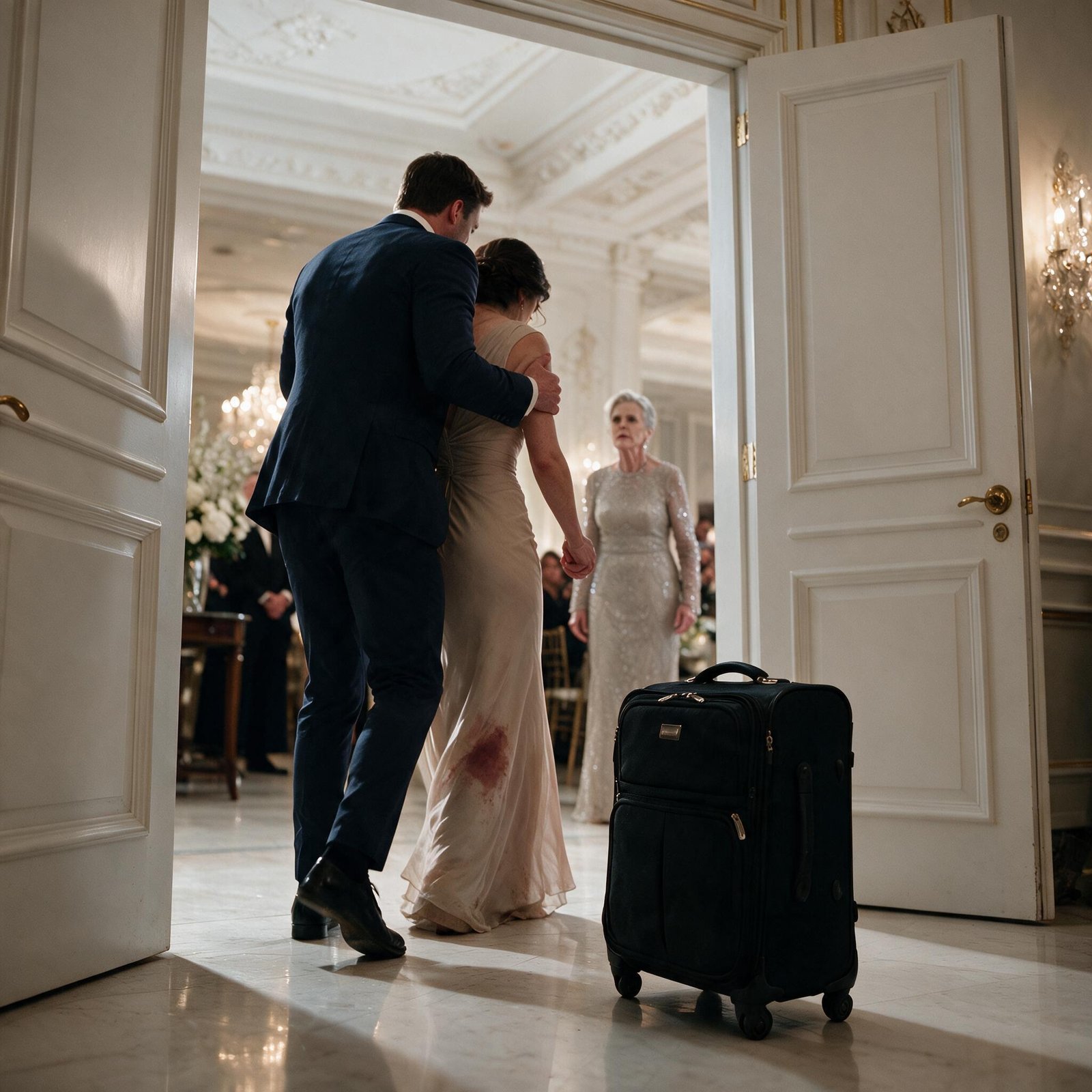
She placed it in the center of the host table, put both hands at her sides, and walked five steps toward the lobby before anyone opened the entrance doors.
Lydia counted because each step carried Victoria farther from the only future everyone had told her was secure.
Robert entered on the sixth step with the black weekender in his hand.
He did not lift Victoria, tell her to leave, or create the movement she had already begun toward the door.
He listened to one quiet explanation, set the bag beside the entrance, and chose to follow his wife.
The good in Robert's action remained real, but it came second.
Years of anniversary speeches reversed the order because a husband sacrificing his place for love sounded more romantic than a young woman refusing the terms of belonging.
Lydia had watched Victoria repeat the revision, but she could not know why Victoria allowed it.
Claire could see how an erased choice could become a measure imposed on everyone else's loyalty.
“She saved my job that night,” Lydia said.
“And last night?”
“My gratitude kept me still without her ever saying the words.”
Lydia did not ask Claire to forgive Victoria because one injured woman had once protected another.
She did not claim trauma transformed abuse into training or suffering into strength.
She simply returned the missing first action to the woman who had taken it and accepted responsibility for failing to act when history demanded something from her.
Claire thought of Ethan saying he chose his wife while holding her hand through the ballroom doors.
His choice had been right, necessary, and too late to become ownership of her answer.
That afternoon, Claire met Ethan in the townhouse living room after both of them agreed on the time and the length of the conversation.
His father's black suitcase stood beside his chair, closed and ordinary, with no secret inside it capable of deciding their future.
Claire told him Lydia's correction and watched grief move across his face as the missing order settled between them.
“Is there any way back?” Ethan asked.
He asked once, without offering money, therapy as a bargain, a different house, or a future version of himself Claire had to wait to meet.
“No, Ethan.”
The answer did not erase six years of love, and love did not require Claire to erase six years of being unheard.
Ethan lowered his eyes, breathed through the answer, and nodded.
“I understand.”
He left without touching Claire, carrying his father's suitcase rather than abandoning another object for a woman to interpret.
Claire remained in the townhouse until her project housing became available, then entered ordinary mediation and ended the marriage without turning the ballroom into evidence for public revenge.
Ethan did not contest the separation, engineer encounters, fund North Coast House, or use his leave from Bellwether as proof that Claire owed him another chance.
Victoria never received Claire's address or permission to contact her.
At Bellwether, Lydia stayed only after daily banquet authority moved to the professional operations team, while Tessa and Graham gave separate accounts through normal workplace channels.
Victoria remained the owner, but ownership no longer allowed her to issue direct floor orders during events.
That consequence neither redeemed her nor returned Claire to the hotel.
Six months later, Claire's divorce was final and North Coast House entered the first week of its eight-month reopening plan.
The project was one weathered coastal hotel with forty-three rooms, not an empire built from suffering.
Claire's team widened a laundry route, added a staff room with a door employees could close, and wrote a service policy that allowed any worker to leave a guest interaction without first earning permission through fear.
Those changes came from Claire's nine years of work and from employees who understood their own jobs, not from Alder money or a dramatic donation.
On the morning the first renovated floor opened, Claire crossed the lobby carrying an olive canvas overnight bag in her own right hand.
A young desk agent offered to take it, and Claire thanked her before choosing to keep carrying it.
No husband waited behind Claire, no mother-in-law owned the doorway, and no crowd watched to decide whether leaving counted as courage.
Robert had followed Victoria, and Ethan had respected Claire's request to go alone.
Claire walked through the open doors first, carrying only what she had chosen to bring.
Part 5 of 5 · The Bag She Carried Herself