The Garden She Saved
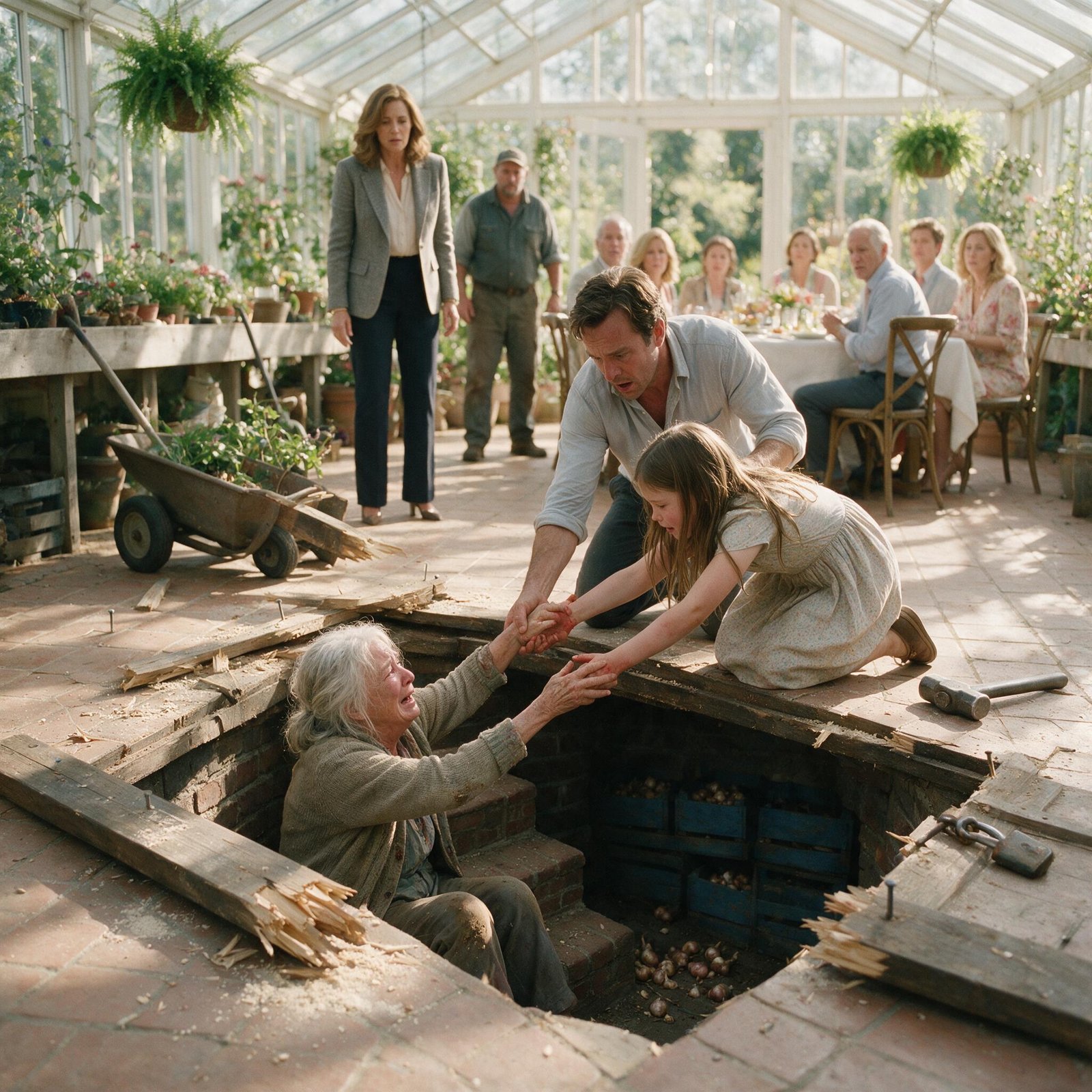
Three weeks after the rescue, Evelyn stood outside the conservatory while Dr. Bell completed a broader controlled review of the Calder lilies.
They still could not name the exact cause of the damage with responsible certainty, and nobody promised that a later test would turn suspicion into a simple answer.
Softened basal rings, damaged roots, and pale growth appeared in bulbs taken from every section of the heritage stock, including crates whose top layers had looked healthy.
Shared soil and years of close storage meant that outward appearance could not establish that the remaining bulbs were clean.
At Evelyn's request, the collection remained isolated throughout the broader review, and nobody treated the conservatory as a danger to people.
Evelyn finally understood the true sentence hidden inside Diane's warning that the cellar was dangerous.
The danger was not the shallow brick room, and it was not a threat to the relatives standing above it.
It was the possibility that the Calder lilies could carry an unresolved problem into any garden that accepted them.
Diane had known enough before the brunch to understand that movement should stop.
Rosa had placed two suspect bulbs in front of both women, Evelyn had ordered the stock isolated, and Diane had answered by demanding that the clean-looking crates become the sale's centerpiece.
When Evelyn refused, Diane waited until she descended voluntarily, dropped the hatch, drove fresh boards across it, and kept Evelyn out of sight for thirty-four minutes.
Evelyn had chosen the sale herself, but Diane had tied her own competence to presenting the Calder collection as a flawless living legacy.
Diane treated a prudent delay as public humiliation and recklessly preserved control over the display at the cost of her mother's freedom.
Diane's fear of public failure made her choice human, but it did not excuse the lie, the locked hatch, or her efforts to stop Lily.
Evelyn could only infer that motive, but Diane's centerpiece demand, her reaction to the delay, and the shifted crate made it the likeliest explanation.
Proof of the confinement remained separate in Evelyn's account, the barriers fastened outside, and the relatives who watched Diane fight the rescue.
Dr. Bell could not identify any section of the collection whose outward health removed the uncertainty.
She described continued containment, further assessment, and professional disposal as decisions with different costs and uncertainties.
Evelyn listened until every option had been stated without pressure.
For nearly half a century, she had believed stewardship meant carrying the Calder lilies into another spring.
Now stewardship asked whether she would risk carrying something else with them simply because loss felt unbearable.
She looked through the glass at rows of blue paint, remembered her mother's hands dividing bulbs at the same table, and allowed herself to grieve before she answered.
“Arrange professional disposal for the entire heritage line.”
Mark inhaled sharply, but he did not argue or ask her to save one bulb for Lily.
Lily pressed against Evelyn's side and cried without treating the tears as a reason to reverse the choice.
By the end of the following week, a professional team had disposed of the heritage stock, its soil, and the materials that could not be safely separated under the plan Evelyn chose.
Evelyn carried nothing away, not even an apparently healthy bulb wrapped for memory.
The empty space along the cellar wall hurt more than she had expected because doing the responsible thing did not make the loss imaginary.
Interim protective conditions kept Diane away from Evelyn and the estate while the confinement case proceeded without any promise of a quick verdict.
Evelyn continued with the estate sale only after changing its terms to keep plant movement separate from the property transfer.
She chose a small single-level house nearby with a raised planting bed wide enough for Lily to reach from either side.
Five months after the rescue, as the following spring warmed her new garden, a reputable nursery delivered ordinary lily bulbs from stock verified clean for sale, with no famous family name and no promise of rarity.
Evelyn and Lily planted them together in fresh soil while Mark assembled an accessible bench a respectful distance away.
When Lily pressed the last bulb into place, she left her palm on the earth and looked toward the empty corner where the blue crates would once have stood.
“Do you miss them?”
“Every day,” Evelyn said.
Lily nodded, accepting an answer that did not turn grief into a lesson too quickly.
They covered the bulb and watered the bed, knowing the new lilies might be plain and might not bloom that year.
The old flowers were gone, and Evelyn would mourn them each spring, but the clean earth beneath Lily's hands held the garden she had chosen to save.
Part 5 of 5 · The Girl Who Tore Open Grandma's Cellar