The Price of a Gift
The girl stood just inside the door while rain darkened the shoulders of her coat.
Her name was Nora Brooks, and she held the numbered purchase card with both hands as if bending it might cancel whatever it promised.
Her aunt, who was also her legal guardian, had given consent and remained beside Grace while Nora presented the card herself.
Sam came around the counter and welcomed Nora with the same quiet courtesy he gave every customer.
He did not ask why her socks were wet or what had happened to the sneakers pinching her toes.
“What kind of shoes are you looking for?”
Nora glanced at Grace, then studied the shelves instead of the adults.
“Ones I can wear to school and run in.”
Sam measured both feet, explained that one was slightly longer, and brought out three practical pairs from the section covered by the card.
Nora rejected the first because the heel slipped and the second because its stiff collar rubbed her ankle.
No one reminded her that free things should not invite complaints.
The third pair was navy blue, with flexible soles and purple laces, and Nora walked the narrow aisle twice to test the fit.
Sam watched the bend of each shoe and asked her to walk once more before approving the fit.
Grace quietly set a package of dry socks beside the box, and Sam added the approved sock item to the sale.
Daniel wanted to tell Nora what another pair had once done for him, but that would have shifted the moment from her choice to his past.
He kept silent and let the moment belong to her.
At the register, Sam entered the card number, shoe size, stock code, and authorized amount without entering Nora's name.
The receipt showed one cent paid and no charitable discount line.
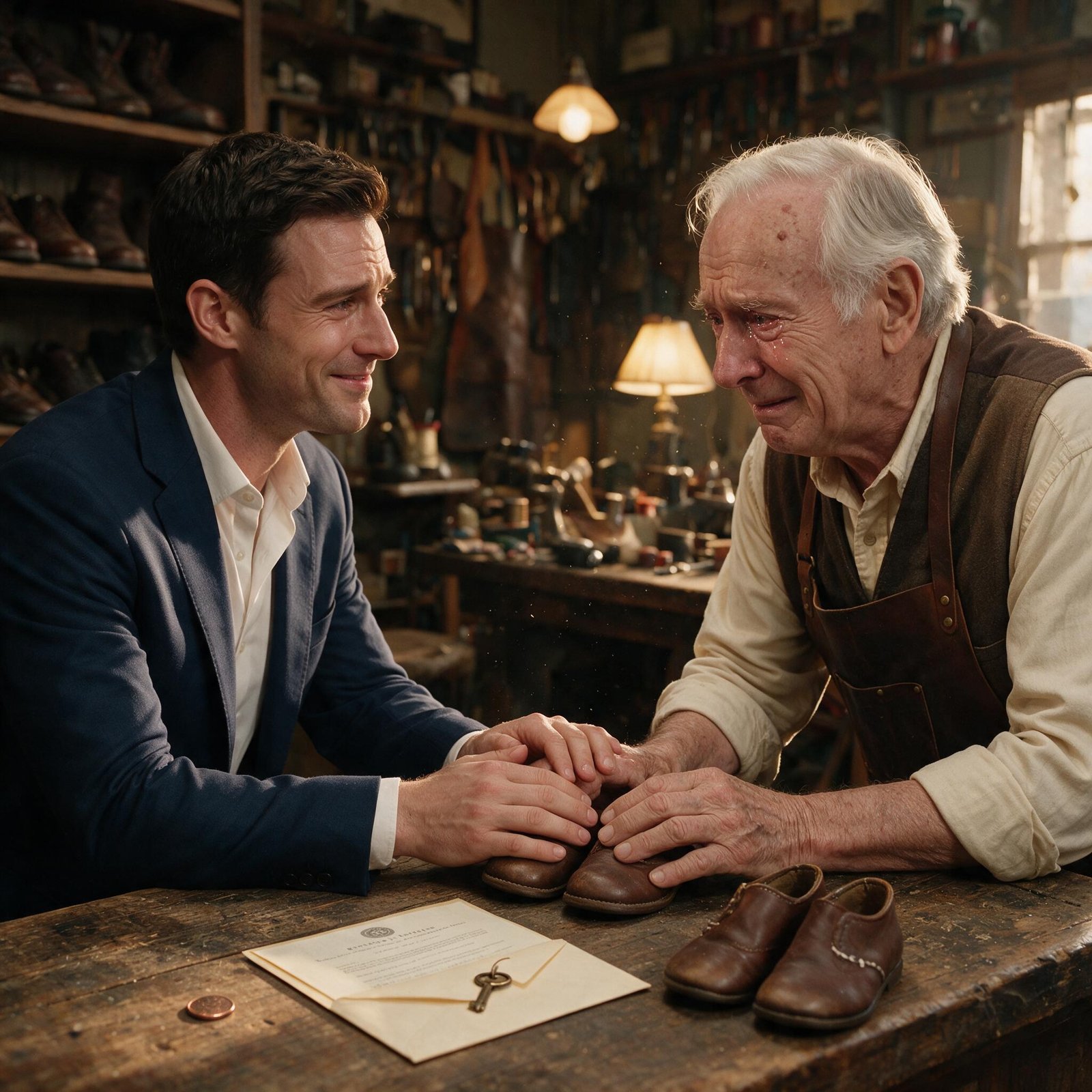
Nora searched the pocket of her coat and placed a copper penny on the counter.
Sam rang the sale and slid the ordinary receipt across to her.
“The socks are in the box, and you can bring the shoes back if anything rubs.”
Nora looked surprised by the return policy, then tucked the receipt carefully beside the purchase card.
“Can I wear them now?”
Sam cut off the tags while Nora changed into dry socks on the fitting bench.
She thanked Sam for helping with the laces and left with her aunt under one umbrella.
Daniel had not been introduced because the child did not owe the funder an audience.
“You let the sale belong to her,” Grace said.
Daniel looked at Nora's penny in the wooden cash box beside the older coin Sam had kept for twenty years.
“It never belonged to me.”
Twelve days passed while Sam's lawyer completed the title review, an independent inspector examined the building, and Sam's accountant tested the carrying costs against the former rent.
On the twelfth afternoon, the shop's bell sounded and Sam's independent lawyer entered carrying the cream property envelope.
Her written report confirmed that Daniel owned the building free of any mortgage or judgment lien.
The proposed transfer contained no reversion clause, management right, naming requirement, occupancy condition, or promise of future publicity.
The independent inspection had found ordinary deferred maintenance but no hidden repair emergency that would make ownership financially untenable for Sam.
Sam's accountant had separately confirmed that the annual property tax, insurance estimate, and expected upkeep were all lower than his former rent.
Daniel remained responsible for donor-side transfer and gift costs, while Sam would receive the property without assuming Daniel's debt because there was none.
The lawyer had also separated the deed from the pilot agreement so ending the shoe program could never return the building to Daniel.
Sam could sell the property, close the shop, refuse future donations, or change suppliers without seeking Daniel's consent.
“You are accepting a building, not a benefactor with a vote,” she told Sam.
“If the program fails, the shop is still yours,” Daniel said.
“If I disagree with you next year?” Sam asked.
“The shop is still yours.”
“If I never tell a reporter what you did?”
“The shop is still yours.”
Sam studied Daniel's face for the insistence of the boy who had once sworn to repay him.
What he found was a man learning that a clean gift ended at the other person's freedom.
The lawyer arranged the deed, written acceptance, and closing statement beside Nora's penny receipt.
Sam read the acceptance one final time, picked up the pen, and signed.
The lawyer completed the closing and submitted the deed through the county's electronic recording system that afternoon.
By sundown, the building no longer belonged to Daniel.
Part 4 of 5 · The Shoes He Sold for One Penny